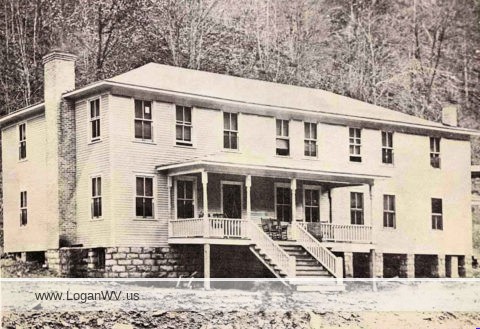
Before company houses and established coal camp communities became common, boarding houses provided a place for miners to live, eat, and rest while working in the coalfields of Logan County, West Virginia.
The Early Days of Coal Mining
The growth of the coal industry transformed Logan County during the late 1800s and early 1900s. Railroads opened the region to outside markets, and coal companies began developing mines throughout the county’s hollows and valleys.
These new mining operations needed workers. Many men came from other parts of West Virginia, neighboring states, and foreign countries to find employment in the mines. Some arrived alone, leaving their wives and children behind until they could establish a home. Others came with the intention of earning money and eventually bringing their families to the coalfields.
Finding a place to live was one of their first challenges.
In the early days of mining, many communities lacked sufficient housing for the growing workforce. Boarding houses helped meet this need by providing miners with a place to sleep and meals to eat. Similar arrangements were common in coalfields throughout southern West Virginia.
What Was a Miner’s Boarding House?
A boarding house was generally a private residence or a building operated specifically to provide lodging and meals for workers. Some were run by individuals or families, while others were associated with mining operations.
Unlike a family home, a boarding house might accommodate several unrelated men under one roof. Depending on the size of the building, miners could share bedrooms, sleep in separate beds in a common room, or occupy small rooms with basic furnishings.
The accommodations varied considerably. Some boarding houses offered relatively comfortable living conditions, while others were crowded and furnished with little more than beds, tables, chairs, and a stove.
For a miner who had traveled many miles to find work, even a modest room and a hot meal could be important comforts.
Boarding houses also provided something beyond shelter. They brought men from different backgrounds together and helped newcomers become acquainted with the community.
Meals, Laundry, and Daily Life
Running a boarding house required considerable work, particularly when many miners depended on it for their daily meals.
The person operating the house had to prepare food, maintain sleeping quarters, clean common areas, and manage the household’s supplies. In many cases, women performed much of this work, making boarding houses another example of the important role women played in the coal-mining economy.
Meals were an important part of the arrangement. Miners performed physically demanding labor, often working long hours underground. They needed substantial food to sustain themselves through the workday.
Breakfast and supper might be served at a common table, while miners carried lunches into the mines. The exact arrangements differed from one household to another.
Laundry and bathing arrangements also varied. Early mining settlements did not always have modern plumbing or dependable water and sanitation facilities. The quality of a miner’s living conditions depended on the building, the community, and the period in which he lived.
Despite these difficulties, boarding houses provided a practical solution to the housing shortage that accompanied the rapid expansion of coal mining.
The Boarding House as a Gathering Place
A boarding house was more than a place to sleep. It could become a gathering place where miners talked about their work, shared news, and discussed their plans for the future.
Men who had left their families behind could find companionship among fellow workers. New arrivals could learn about nearby communities, available jobs, and the customs of their new surroundings.
Miners came from many different backgrounds. Some were lifelong West Virginians, while others had migrated from other states or immigrated from Europe. Living and eating together created opportunities for friendships among men who might otherwise never have met.
Their conversations could turn to mining conditions, wages, family matters, local events, or the dangers they faced underground.
The work itself was hazardous. Roof falls, explosions, machinery accidents, and other dangers were part of the coal miner’s world. Fellow workers often understood these risks better than anyone outside the industry.
For men living away from home, the relationships formed in these early communities could become an important part of their lives.
From Boarding Houses to Company Houses
As coal production expanded, companies began building more permanent communities around their mines. These settlements often included company-owned houses, stores, schools, churches, and other facilities.
The development of company housing gradually changed the way many miners lived.
A single miner might initially rent a bed in a boarding house. After marrying or bringing his family to Logan County, he might move into a company house. A family dwelling offered greater privacy and allowed a wife and children to establish a home near the mine.
Company houses became a defining feature of Logan County’s coal camps. Communities grew along the creeks and railroad lines, with homes arranged near the mines, tipples, company stores, and other facilities.
By 1922, nearly 80 percent of West Virginia’s miners lived in company housing, according to the West Virginia Coal Heritage Project.
Company housing was not the same as a boarding house. A boarding house typically provided lodging and often meals, while a company house was a dwelling rented to a miner or his family.
Both, however, were important parts of the housing system that developed around the coal industry.
Boarding Houses in Logan County’s Coal Communities
Logan County’s mining history includes many communities built around coal operations. Holden, Omar, Mallory, Lundale, Whitman, Chauncey, Sharples, Dehue, Amherstdale, and Monaville are among the places associated with this history.
As these communities developed, housing arrangements changed to accommodate a growing workforce and the families who settled in the area.
Boarding houses were part of the broader story of how miners found shelter during the industry’s early development. However, the history of individual boarding houses is not always well documented. Their locations, operators, number of residents, and years of operation may survive only in family recollections, old photographs, newspaper accounts, census records, and other historical documents.
One recollection preserved on LoganWV.us describes an old boarding house in the Peach Creek area. The building was remembered as part of a once-thriving mining community, alongside the company store, mine office, railroad, and other features that gradually disappeared.
Such recollections help preserve the memory of buildings that might otherwise be forgotten.
They also remind us that a coal community consisted of much more than the mine itself. It included the homes, businesses, gathering places, and everyday routines that shaped the lives of the people who lived there.
The People Behind the Boarding Houses
The story of boarding houses is also the story of the people who operated them.
A boarding house could provide a source of income for a local family. Its operator had to purchase food, prepare meals, maintain the building, and accommodate the needs of working men.
The work could be demanding, especially when the house was full. Cooking for a large number of miners required planning and steady effort. Cleaning, washing clothes, and keeping sleeping quarters in order added to the daily workload.
Some operators may have been local residents who recognized a business opportunity created by the influx of miners. Others may have had family connections to the mining industry.
Each boarding house had its own history. Some may have operated for many years, while others served only during the early stages of a mine’s development.
Identifying these buildings and the people who ran them is an important part of documenting Logan County’s social and economic history.
Preserving the Memory of Logan County’s Boarding Houses
Today, many of the early buildings associated with coal mining have disappeared. Some were demolished as mines closed, while others deteriorated or were replaced by newer construction.
Photographs, census records, newspaper clippings, property records, and personal memories can help reconstruct the history of these places.
Family stories are especially valuable. A photograph of an old house may not identify its purpose, but someone who remembers the community might recognize it as a boarding house or identify the family that operated it.
The following questions can help uncover more information:
- Where were boarding houses located in Logan County?
- Who owned or operated them?
- Which mines did their residents work for?
- How many miners lived in each house?
- Were meals included in the cost of lodging?
- When did the boarding houses open and close?
- Are there surviving photographs or family stories about them?
Answers to these questions would help establish a more complete record of the people and places that supported the county’s coal industry.
A Forgotten Part of Coal-Mining History
When people remember Logan County’s coal-mining past, they often think of the mines, coal tipples, company stores, railroad tracks, and rows of company houses.
Boarding houses deserve a place in that history, too.
They provided shelter for workers who came to the region seeking employment. They helped mining operations bring together the labor force needed to produce coal. They also became part of the daily lives of the men who worked underground and the families who helped support them.
Before many miners established permanent homes, boarding houses offered a place to rest between shifts and prepare for another day in the mines.
Preserving their history helps us understand how Logan County’s mining communities developed and how ordinary people made their lives in a rapidly changing region.
Do you remember a boarding house in Logan County, West Virginia? If your family has photographs, stories, or information about a boarding house, its location, or the people who lived there, consider sharing those memories with LoganWV.us. Your contribution could help preserve a piece of Logan County history for future generations.
Historical references
These sources provide background for the article and can help readers explore the history further.
-
West Virginia Coal Heritage Project — Company Towns — Explains the development of mining communities and company housing.
-
e-WV: The West Virginia Encyclopedia — Company Towns — Describes housing conditions and the organization of coal towns.
-
LoganWV.us — Remembering the Community of Holden 22 — Local recollections about Logan County’s numbered coal camps.
-
LoganWV.us — Recollections — Personal memories of Logan County communities, including references to an old boarding house in the Peach Creek area.
Historical note: The article distinguishes the well-documented regional practice of operating boarding houses from the specific histories of individual Logan County buildings, which require additional local records or firsthand recollections to verify.
*This article was created with the assistance of ChatGPT.
My grandfather, Herbert Thompson (1897-1986), met my grandmother, Myrtle Adams (1901-1975), at a boarding house in Cherry Tree where he was staying and she worked.