By Dwight Williamson
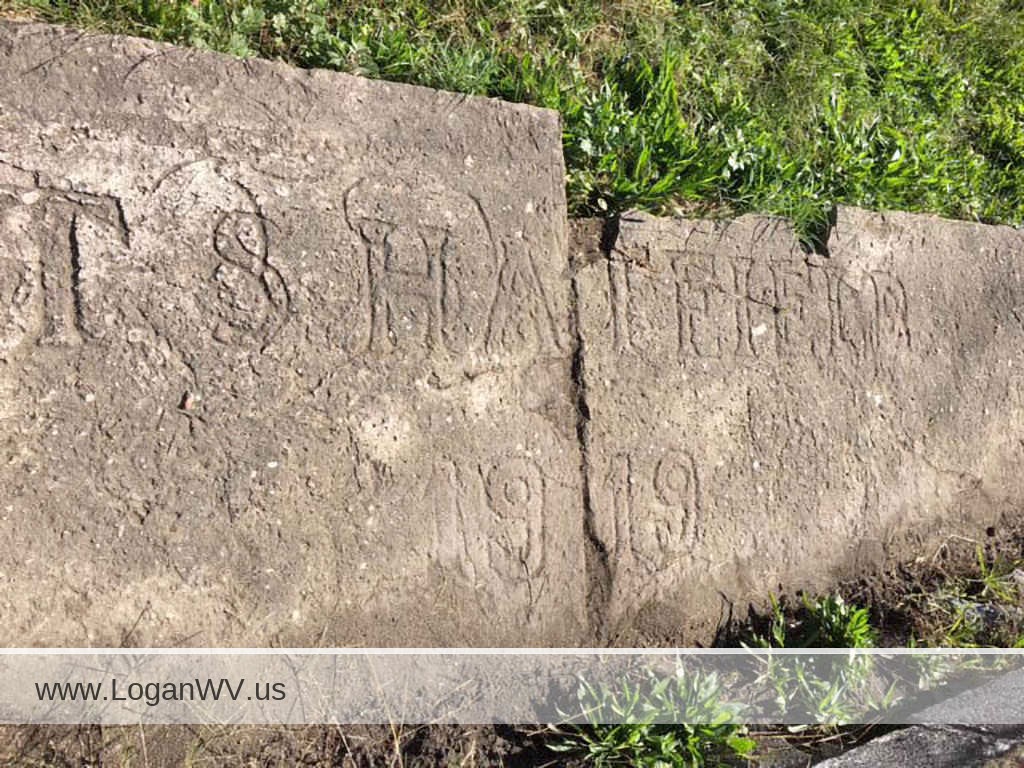
There have been countless stories and several books written in regard to Devil Anse Hatfield and the feud between the Hatfields and the McCoys. However, perhaps the most interesting character of this entire bunch is the youngest child of the famous Hatfield leader, his 13th born offspring, Tennis Samuel Hatfield.
It was Tennis, in all likelihood for mostly political reasons, who helped organize the first Hatfield Reunion that was held on Main Island Creek near the graveyard and the Hatfield home place. By the year of 1929 when the third annual Hatfield Reunion was conducted, an unimaginable 10,000 people were reported to have attended. Tennis had served a term as Logan County sheriff and his brother, Joe, succeeded him, and was then the county sheriff. Tennis today holds the claim to being the first ever Republican elected sheriff in Logan County.
While Devil Anse has been described as one of the most “colorful and charismatic” men of American folklore, a long study of his son, Tennis, sheds a totally different light on the infamous Hatfield name. The entire life of former sheriff T.S. Hatfield will be revealed in a future publication, but for today’s purposes, a portion of the shadowy side of Tennis Hatfield must be revealed; it is a part of our local history that cannot, like Tennis himself, remain entombed at the family cemetery.
There are many “twists and turns” to the history of Logan County, but during the 1920s and ‘30s, the name of Don Chafin played a prominent role in just about every historical aspect. Indeed, Chafin was a key player in the life of the diabolical Tennis Hatfield. It would be Hatfield who would succeed his cousin, Don Chafin, as sheriff of Logan County — but not until Hatfield’s testimony placed the “King of Logan County” in an Atlanta, Ga., prison. And it would be Chafin who would in 1924 keep his former partner in crime from gaining the sheriff’s office for 16 months, pending an appeal of the election results by Hatfield to the State Supreme Court.
Chafin and Hatfield had been partners in the Blue Goose bar at Barnabus even while Chafin was sheriff and before Prohibition came into being in 1920. Deed records show Hatfield owned eight lots at the mouth of the Cow Creek location, which also included a boarding house. It was at this boarding house that many union organizers, who came to Logan County on behalf of the UMWA, would take advantage of the illegal liquor provided at the Blue Goose, though many would never live to tell about it.
Political and financial arguments are said to have led to the notorious Chafin seeing to it that Hatfield was imprisoned for the making and selling of illegal liquor at the Blue Goose location. Hatfield served his time, but later testified against Chafin, who was convicted and sentenced to three years prison. It was during Chafin’s appeal process in 1924 and while Hatfield sought the office of sheriff that the one-time hero of the Blair Mountain Battle went to all lengths to keep Hatfield from gaining power. Chafin would enter prison in 1925, after losing his appeal, and after Republican President Calvin Coolidge refused to grant Chafin a pardon. After just 10 months, however, the Georgia governor granted a pardon to the renowned former sheriff, who still owned much of Logan County.
Ironically, while Chafin was headed to prison, Hatfield was to become sheriff, after appealing the results of his election loss to the State Supreme Court, which found that illegal actions by Don Chafin at both Mud Fork and Striker precincts caused Emmett Scaggs to narrowly defeat Hatfield. When those two precincts were thrown out, Hatfield was declared the winner.
The Supreme Court said that on Election Day Chafin, along with seven of his former deputies, intimidated voters with their guns and that they had even voted for people. Testimony showed that after one voter challenged Chafin at Mud Fork, the former sheriff struck the man in the face and announced that he was now “running the place.” In the wake of Mud Fork and Striker results being discarded, Hatfield won by a margin of 128 votes: 7,120 to Scaggs’ 6,992.
Though Chafin, who had gotten away with cold-blooded murder in 1917, had made a fortune from coal operators by keeping the union out of Logan, Hatfield decided that gambling, prostitution and illegal liquor sales would be the route he would take. When his brother, Joe, was elected in 1928, Tennis continued to run the show, according to most reports of the time.
In what has to be regarded as a “monumental” time in Logan history in 1930, while Joe Hatfield was sheriff, Enoch Scaggs, the brother of Emmett Scaggs, who had been defeated in 1924 by Tennis, walked into the Smokehouse restaurant in Logan and put five bullets into Logan Police Chief Roy Knotts’ body on Knotts’ first day on the job. The former state policeman had taken the position when the former chief quit, following the announcement by the city’s manager (mayor) that all gambling machines in Logan would be confiscated and that an end to prostitution and illegal liquor sales were to be sought. It was rumored that Tennis Hatfield had hired the former deputy, who a few years earlier had already gotten away with murder during a poker game at Chapmanville, to assassinate Chief Knotts. The plan was for Scaggs to be found not guilty on the grounds of self-defense.
Logan Circuit Judge Naaman Jackson, said to be a highly principled individual, met with Gov. William Conley and Attorney General Howard B. Lee in Charleston, and he explained that Scaggs would not be convicted in Logan and that crime and corruption had taken over Logan County. A special jury from Monroe County was brought to Logan, and Scaggs was ultimately convicted. Joe Hatfield, who had been told by the governor and Lee that he was facing prison himself, became a changed man, according to all accounts. This also meant the beginning of the end for his brother, Tennis.
Tennis, who would father nine children through three marriages, also had several illegitimate children, some of which never took the Hatfield name.
During an unpleasant divorce in 1930 between Tennis and Sadie Hatfield, the shocking announcement in a petition filed by Sadie Hatfield was that several years prior at the insistence of Joe and Tennis Hatfield, and after she was threatened by death or great bodily harm by her husband, she was made to practice writing Don Chafin’s signature and then later forged papers that helped convict Chafin in federal court.
Mrs. Hatfield added that Tennis had recently threatened to kill her and that “the incumbency of Joe Hatfield has been marked by a reign of terror originating when Tennis was sheriff, but growing worse; that the laws have completely broken down.” The petition further stated that Tennis, since retiring from office, had an “equal voice with Joe in the administration of affairs” and that “he controls the operation of slot machines and other gambling devices.”
Tennis had lost his clout and was drinking heavier than usual while being sued by different businesses and individuals. With Democrats clearly in political power and lawsuits pending, the Blue Goose bar and boarding house both would burn, as would Devil Anse’s home place where Tennis happened to be residing.
Few people know it, but the site of the Blue Goose bar, which was referred to as the Blue Goose Pub site at Barnabus, was once the site of several tourist attractions. Visitors many years ago traveled by bus and saw the following Logan County locations: Jack Dempsey’s childhood home at Holden; the old mine portal at Rossmore; Indian Serpent Mound at Pine Creek; the Cap Hatfield Cemetery; Cut Stone House at Stirrat; Cap Hatfield’s Home; the Hatfield Cemetery; Hatfield Fort site, and the Devil Anse Hatfield home site. Only the cemeteries and the stone cut home remain today; although an empty bottom is where the Hatfield home place existed. Cap Hatfield’s house set empty without any repairs for years before it finally collapsed.
The location of the former Blue Goose and the boarding house is now owned by Richard DeHart. His father, Glaston DeHart, purchased the property in 1970 from Noah Browning. Browning obtained the eight-lot location in 1935 when Hatfield lost a lawsuit in Logan Circuit Court to W.E. Duncan Plumbing Co. of Delbarton in which the decree forced the sale. Browning paid $334.34 for the real estate that once probably earned Tennis Hatfield that much money in a day or two.
Hatfield, who died in 1953 at the age of 62 from a brain hemorrhage, would later — following the repeal of Prohibition — open another bar where he could look out a window and see the graveyard statue of his father. The beer joint was named the Silver Moon Tavern. In an interview in 1940, Tennis Hatfield, once the mighty sheriff of Logan County, would ask: “I wonder what Pa would-a thought of my place.”
For that story, as well as the tale of at least eight Barnabus murders, and a “well” kept secret about the former home of the Blue Goose tavern, readers will have to re-engage next week when interviews with brothers Michael and Richard DeHart reveal what Tennis Hatfield’s son had to say about his scandalous father.
Dwight Williamson is a former writer for the Logan Banner and a retired magistrate for Logan County.
*Published with the author’s permission.
Leave a comment.
Articles by Dwight Williamson on this site.
- “Boots” was anything but a normal coal miner
- 1916, 1917 were especially eventful years in Logan County
- A guardian angel from 1972
- A stringent look into the history of Logan County
- Alderson helped elevate Logan to greatness
- Articles About The Murder of Mamie Thurman
- C.C. Chambers was one tough judge
- Cap Hatfield led an interesting life
- Changes in Logan during the year 1912
- City losing another historical structure
- Coal camp Christmas memories
- Death of the Hatfield brothers
- Dehue Company Store Closing
- Don Chafin and the Battle of Blair Mountain
- Early 1900s Logan was crime infused with soap opera
- Early Logan Co.: A mighty tough place to live
- Early Logan County was a ‘mess’
- Early Travel in Logan County
- English credited with discovering coal in Logan Co.
- Even without the vote, Logan women accomplished much
- Every building in downtown Logan has a story
- Finding Princess Aracoma
- Fires change course of Logan’s history
- Former baseball player from Holden barely remembered today
- Frank Hall was a legendary moonshiner
- Growing up with the Company Store
- Halloween escapades of the “Porch Sitters”
- Hatfield and Chafin clans played large role in Logan history
- History before our eyes
- Holiday Memories from the Shegon Inn
- Kathy’s story
- Life was more free when tram roads crossed the mountains
- Logan Co. people with national interest
- Logan County history filled with unsolved murders
- Logan County is rich with Native American history
- Logan High School almost missed being on the island
- Logan was a focal point of Tommy gun sales
- Logan’s Boulevard has a storied history
- Longing for the good old days
- Man, W.Va., holds 100 years of memories
- Mid-1930s were a wild time in Logan County
- Monumental efforts gave us our ‘Doughboy’
- Neighbors
- Random thoughts on Logan history and people
- Recalling one of the worst floods in Logan
- Recollections of old stores and “filling” stations
- Remembering some of the coal camp communities
- Remembering the Community of Holden 22
- Searching for the Holland grave
- Since Mamie Thurman’s Day, Has Logan Changed?
- Some early history of the Logan area
- Some find their life goals at home; others move away
- Spiritually reuniting Logan’s pioneer couple
- Tennis Hatfield’s rise and fall is a story to remember
- The Civil War in Logan County
- The Creation of Logan County
- The end of the Hatfield political dominance
- The historic cemetery in Logan
- The journey of Logan’s Woman’s Club
- The legendary Don Chafin
- The little town at the mouth of Buffalo Creek
- The man responsible for the creation of Mingo County
- The Midelburg family history in Logan
- The murderous ’30s
- The old custom of ‘funeralizing’
- The porch sitters
- The story of Tennis Hatfield, son of Devil Anse
- The story of the Chirico family restaurants
- Those were the good old days of Logan
- Today’s kids don’t know the freedom we had