By Dwight Williamson
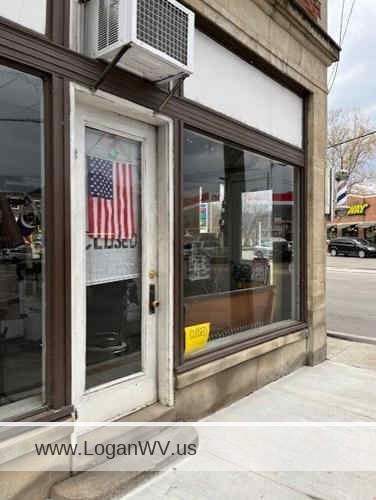
My earliest recollection of receiving a haircut is when I was about five years old and sitting in a chair on my grandparents’ front porch. Although I can’t say for sure, I suspect the hair cutting event was likely due to me getting ready to go to school for the first time. I do not remember the haircut as being a pleasant experience.
My grandfather was the self-imposed “barber” that day and what I recall is that the clippers he used were not electric and that every other cut pulled hair from my head, instead of cutting it. The clippers were simply miniature metal shears. No wonder kids back then developed a fear of going to a real barber shop, even though electric clippers were utilized there.
In a twist of fate, despite my grandfather being a coal miner for Island Creek Coal Co., for over 40 years and my father a miner at Dehue for over twenty years, it was my dad who became a licensed barber. It was a profession he much preferred to coal mining.
The only barber shop my father worked at before returning to the coal mines to earn a better living for his seven children was the barber shop in Logan that is known as “Choppers,” which is operated by Chad Browning. That barber shop is actually a historic relic in Logan that opened in 1928, the same time the remainder of the building began operation as Logan County’s first public bus terminal. The building is owned by former Radio Shack businessman Stan Morgan.
Although the bus terminal lost its existence as such when the Logan boulevard construction took the loading area of the terminal on the backside of the Dingess Street location, the barber shop continues to function some 95 years after it opened. I wondered if the barber pole located there is the original one from 1928, so I telephoned Chad Browning, the barber there.
“The one that was there was broken in 2007 when a big truck was making the turn onto Main Street,” Browning explained. “But I don’t know if that was the original one from 1928.” An old photograph of the building from the 1920’s time period shows a barber pole in the same location as the one there today.
I’ve always been intrigued by that barber shop and the former bus station building, even to the point of exploring the upstairs apartments and offices that now are quietly idle — one apartment there being the scene of a bloody 2007 murder of a harmless woman (Jimolee Workman) known well in the community.
What also makes the barber shop special is that from everything I can find out, it appears the place that so many of us have passed by numerous times when entering Logan — and the location in which I still get most of my haircuts — is the fourth-oldest continuously operating barber shop in America.
The oldest such operating shop in the country, simply named “George’s Barber Shop,” is located just 20 minutes outside of Boston, Massachusetts, in a city named Saugus, which has a population of just over 26,000. The second-oldest continuous operating shop is located in Salt Lake City, Utah. That old-timey turn-of-the-century barber shop called “Rays” opened in 1907.
The third oldest shop opened about 1920 in Brooklyn, New York, and is known as Vincent’s Barber Shop. It is a favorite of that city due to its unusually low haircut price of just $13.
While there are numerous larger barber shops across the country that have been operating for many decades, it appears the fourth oldest continuously operated barber shop in these United States is Choppers, which of course, makes it number one in West Virginia, a fact that deserves glorification in the form of a historical marker erected at the building site.
Barber shops have traditionally been a place where men and sometimes women, amidst the low buzzing sound of hair clippers, have discussed topics of just about every nature, from the Bible to politics. Nonetheless, there was a time when a barber’s duties included much more than cutting hair.
Despite a history dating back to Egyptian times when both men and women shaved their heads using oyster shells and sharpened flint, barbers later also had other duties and were titled “barber-surgeons.” Their jobs often included pulling teeth and performing certain surgeries, including setting bones, treating wounds, and even bloodletting, which is said to be the reason for the red, white and blue traditional barber pole.
The original barber pole or staff reportedly was tightly gripped by the patient to encourage blood flow, while the brass-covered top was the vessel in which leeches were kept. The bottom of the pole was used to hold the drained blood. The red on the pole supposedly represents the blood; the white represented bandages, and the blue was believed to be added as a matter of homage to our national colors.
It wasn’t until 1920, centuries after barbers were separated from physicians, that barbering was recognized as a profession. This followed World War I after men together in trenches cut their hair short and kept their faces shaved due to the infestation of body lice and for the ability to keep a gas mask attached tightly to their faces.
Barbering licenses first were required when in 1897 Minnesota passed the law requiring a license and inspection of barber shops in an effort to protect the public from certain diseases such as ringworm and anthrax, both of which are seldom heard of today. For the next 40 years, other states did the same, requiring licenses and causing inspections.
Barber shops used to be abundant in the city of Logan and in nearly every coal camp community within the county, as well as the towns of Man and Chapmanville. With Logan once being a much more populated location, it was not unusual to see multiple barbers in some shops.
Choppers, for instance, once featured three barber chairs, including during the time my own father worked there when the shop was named the H.C. Williamson Barber Shop, and later when Grant Dunsford took over the shop.
Herschel Williamson, who began working there in 1929 when it was named the Terminal Barber Shop, changed the name and then operated the shop until he was near 90, remarkably, walking daily to work from his High Street residence in Logan. His daughter, the late Lajenna Aldredge, owner of Forrest Lawn Cemetery, told me her father finally quit working when his eyesight almost left him blind.
“He loved barbering,” Mrs. Aldredge said. “He walked six days a week to work, and he really enjoyed talking politics with his customers,” she added once when I interviewed her concerning the abandoned cemetery at McConnell, originally known as Logan Memorial Park. Several bodies were exhumed from McConnell and re-buried at Forrest Lawn when it opened, after the land there was purchased by Harris Funeral Home owner Charles Harris in 1947. The McConnell Cemetery, whose owners originally promised perpetual care to its numerous grave plot buyers, was soon thereafter abandoned. Some of Logan’s most outstanding leaders remain buried in that shameful burial place.
That 20-acre cemetery, like the barber shop building and other structures in Logan, embraces a great deal of local history — all just waiting to be told.
Dwight Williamson is a former writer for the Logan Banner and a retired magistrate for Logan County.
*Published with the author’s permission.
Articles by Dwight Williamson on this site.
- “Boots” was anything but a normal coal miner
- 1916, 1917 were especially eventful years in Logan County
- A guardian angel from 1972
- A stringent look into the history of Logan County
- Alderson helped elevate Logan to greatness
- Articles About The Murder of Mamie Thurman
- C.C. Chambers was one tough judge
- Cap Hatfield led an interesting life
- Carmello “Mel” Cottone went from Mt. Gay to the White House
- Changes in Logan during the year 1912
- City losing another historical structure
- Coal camp Christmas memories
- Death of the Hatfield brothers
- Dehue Company Store Closing
- Don Chafin and the Battle of Blair Mountain
- Early 1900s Logan was crime infused with soap opera
- Early Logan Co.: A mighty tough place to live
- Early Logan County was a ‘mess’
- Early Travel in Logan County
- English credited with discovering coal in Logan Co.
- Even without the vote, Logan women accomplished much
- Every building in downtown Logan has a story
- Finding Princess Aracoma
- Fires change course of Logan’s history
- Former baseball player from Holden barely remembered today
- Frank Hall was a legendary moonshiner
- Graveyards abounded under Logan streets
- Growing up with the Company Store
- Halloween escapades of the “Porch Sitters”
- Hatfield and Chafin clans played large role in Logan history
- History before our eyes
- Holiday Memories from the Shegon Inn
- Kathy’s story
- Life was more free when tram roads crossed the mountains
- Logan area had thriving Italian community
- Logan Co. people with national interest
- Logan County history filled with unsolved murders
- Logan County is rich with Native American history
- Logan High School almost missed being on the island
- Logan was a focal point of Tommy gun sales
- Logan’s Boulevard has a storied history
- Longing for the good old days
- Man, W.Va., holds 100 years of memories
- Mel Cottone recalls growing up in Logan
- Mel Cottone rubbed elbows with presidents
- Mid-1930s were a wild time in Logan County
- Monumental efforts gave us our ‘Doughboy’
- Neighbors
- Old newspaper articles tell of Battle of Blair Mountain
- Random thoughts on Logan history and people
- Recalling one of the worst floods in Logan
- Recollections of old stores and “filling” stations
- Remembering some of the coal camp communities
- Remembering the Community of Holden 22
- Searching for the Holland grave
- Since Mamie Thurman’s Day, Has Logan Changed?
- Some early history of the Logan area
- Some find their life goals at home; others move away
- Spiritually reuniting Logan’s pioneer couple
- Tennis Hatfield and the Blue Goose Saloon
- Tennis Hatfield’s rise and fall is a story to remember
- The Civil War in Logan County
- The Creation of Logan County
- The end of the Hatfield political dominance
- The historic cemetery in Logan
- The journey of Logan’s Woman’s Club
- The legendary Don Chafin
- The little town at the mouth of Buffalo Creek
- The man responsible for the creation of Mingo County
- The Midelburg family history in Logan
- The murderous ’30s
- The old custom of ‘funeralizing’
- The porch sitters
- The story of Tennis Hatfield, son of Devil Anse
- The story of the Chirico family restaurants
- Those were the good old days of Logan
- Today’s kids don’t know the freedom we had
- We were ‘poor,’ but I didn’t care and still don’t
- WV’s oldest barber shop is in Logan
Dwight, you did a wonderful job of research for this enjoyable story.
I received my first haircut by Mr. Williamson at the age of two in 1948. He had a board on the seat to raise me up to cut my hair. My last haircut by him was in 1964 when I told him good bye as I was moving to California. I visited with him in 1988 when I returned to Logan. I wanted to get a photo of him but he said no. His shop was full of men waiting to get their hair cut. I did get a photo of the front of his shop and that photo is on this Logan site.
Thank you so much for sharing your memories of Logan.
H.C. Williamson was one fine fellow. I used to sit behind him at the Logan Presbyterian Church. Have you ever met someone who just gives you the feeling he’s part of your family even though you really aren’t related. That was H.C. I remember years later seeing his name still painted in the window of that Barbershop in the old timey hand painted way as I walked down the street It’s like I got my hair cut by a legend. That glass with his name on it, just was more impactful than many other historical sites I have seen as a Park Ranger. Moreover it is personal.